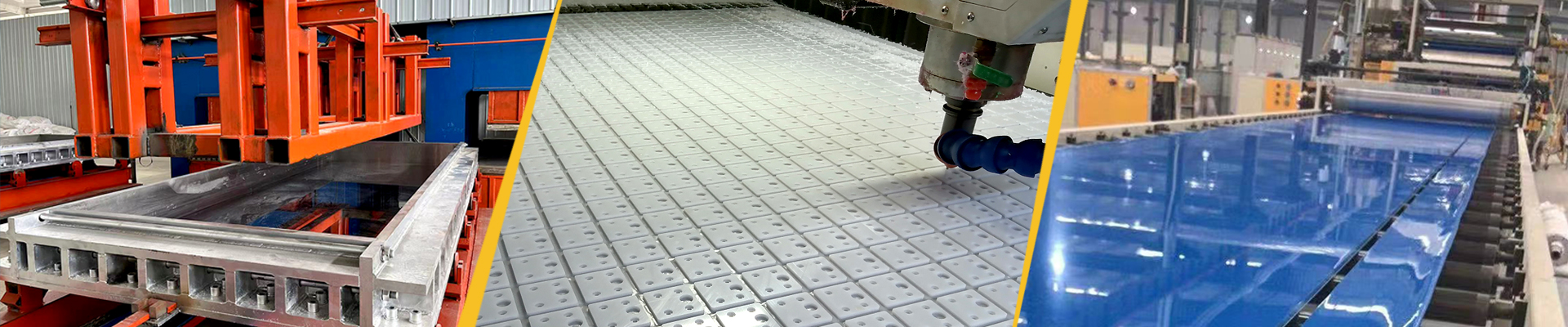
When specifying internals for distillation, absorption, or scrubbing columns, the choice of material often comes down to a trade‑off between performance and durability. For applications involving aggressive chemicals, polypropylene (PP) sieve trays offer a solution that sidesteps the limitations of both metal and traditional random packing.
Designed for the Toughest Media
PP sieve trays excel where corrosion is unavoidable. Acids, alkalis, chlorides, and salt-laden environments quickly degrade stainless steel and even some higher alloys. Polypropylene, however, remains inert in these conditions, eliminating the risk of premature failure or metal ion contamination—a critical factor in industries like pharmaceuticals, electronics, and water treatment.
Unlike packing materials that can trap solids and cause channeling, sieve trays provide a predictable, staged separation process. The uniform perforations create consistent vapor‑liquid contact, making efficiency easier to predict and maintain over time.
Customization Beyond the Standard
A well‑designed PP tray is not simply a punched sheet of plastic. To perform reliably, several engineering details must be addressed:
Tray thickness and reinforcement – Polypropylene has a lower modulus than metal. Proper tray thickness (typically 10–20 mm depending on diameter) and integral stiffening ribs prevent deflection under operating loads.
Support rings and clamping – Unlike metal trays that are often welded, PP trays are bolted or clamped to support rings. This allows for thermal expansion and simplifies future replacement.
Weir design – Adjustable or custom‑height weirs help fine‑tune liquid holdup, ensuring stable operation across varying feed rates.
Hole pattern and open area – Sieve hole size, pitch, and open area are calculated based on the specific vapor and liquid loads to avoid weeping or entrainment.
Installation and Maintenance Advantages
The lightweight nature of polypropylene brings practical benefits during installation. A single worker can handle a large tray section without lifting equipment, reducing downtime during turnarounds. Additionally, the smooth, non‑stick surface of PP resists fouling from sticky or scaling media; when cleaning is required, trays can be quickly removed, pressure‑washed, and reinstated—often without specialized tools.
Where PP Sieve Trays Make Sense
PP trays are most commonly found in:
Flue gas desulfurization (FGD) systems – where chloride concentrations are high and stainless steel would suffer pitting corrosion.
Hydrochloric acid recovery columns – operating below 85 °C (185 °F).
Caustic scrubbers – handling NaOH or amine solutions.
Demineralized water degassifiers – where metal contamination cannot be tolerated.